
Fine Line Tattoos: How They Age, Where to Place Them and How to Care for Them
Fine line tattoos are delicate, detailed and endlessly popular, but they come with more questions than most styles. Will it blur? Where should it go? Why do some artists push back on making it smaller? This guide covers what to know before you book, so your piece looks as good in ten years as it does on day one.
What makes a tattoo “fine line”?
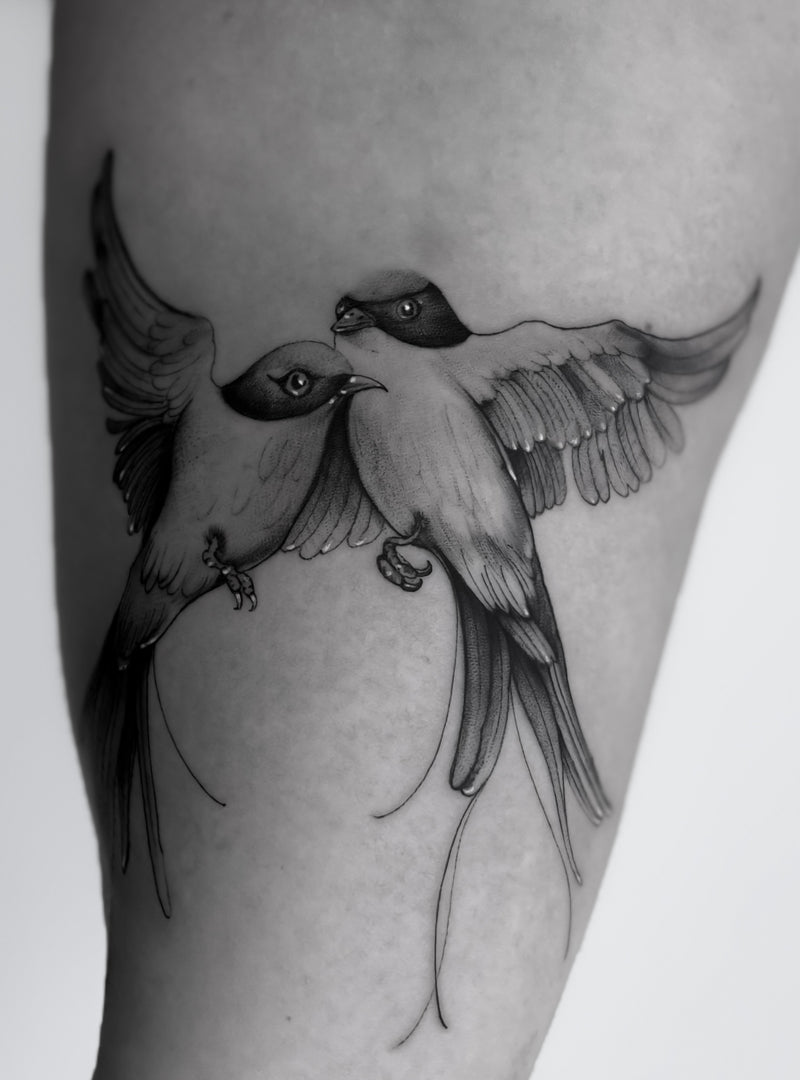
Fine line work uses thin needle groupings to create crisp, light linework and soft shading. It suits florals, botanicals, script, ornamental patterns and small, minimal designs. The result is refined and subtle rather than bold, which is exactly why it needs a little more planning than heavier styles.
How fine line tattoos age
All tattoos soften over time as ink settles under the skin. Fine lines have less ink to begin with, so the way a design is drawn matters more. The things that help a fine line tattoo last are:
- Enough space between lines. Lines drawn too close together can merge as they settle. Good fine line artists build breathing room into the design.
- Sensible sizing. Tiny, intricate detail is the first thing to soften. Going a little larger lets the detail hold.
- Sun protection. UV is the biggest enemy of fine line work. Covering it or using sunscreen once healed makes a real difference.
If your artist suggests going a bit bigger or simplifying a detail, it's usually to protect how the tattoo will look years from now.
Where to place a fine line tattoo
Placement affects both how the tattoo looks and how it holds up.
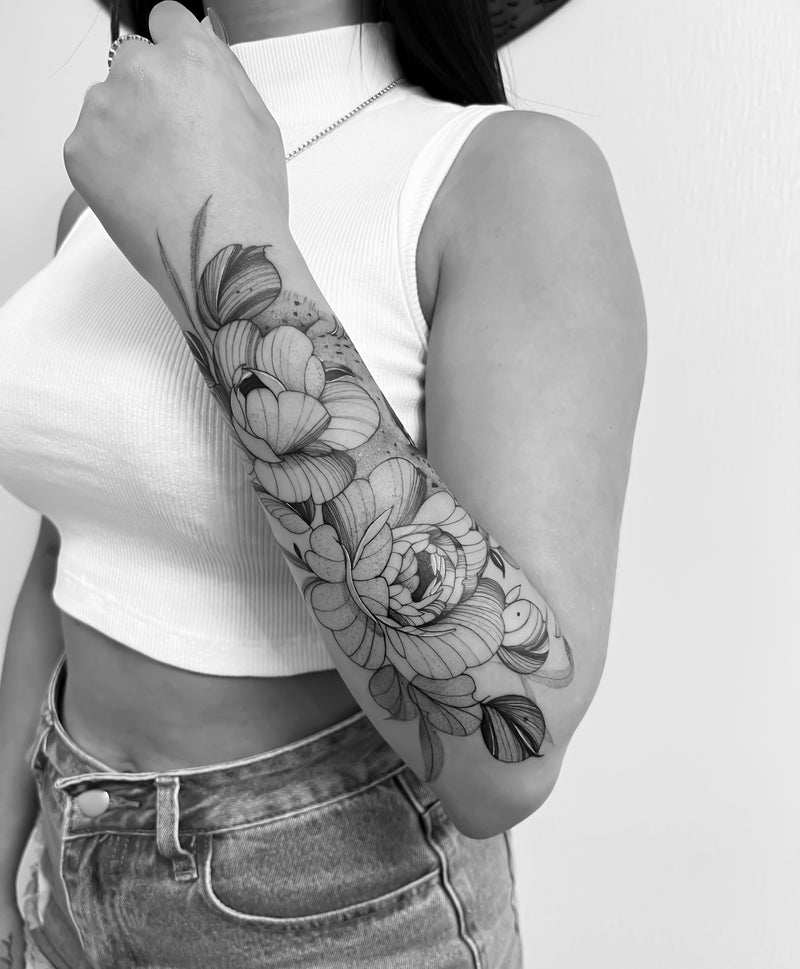
- Great spots: forearm, upper arm, shoulder, collarbone, sternum, ribs, thigh and the back. These areas are relatively stable and get less friction.
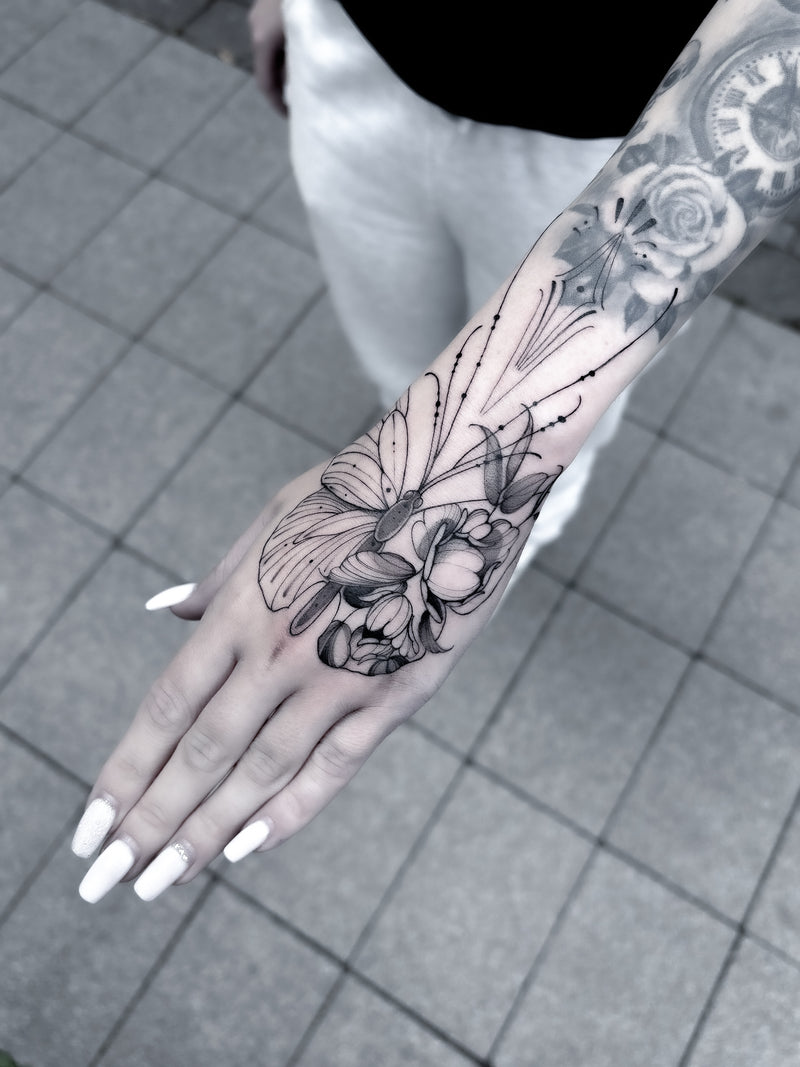
- Trickier spots: fingers, hands, feet and the sides of the fingers. Skin there regenerates quickly and rubs constantly, so fine lines can fade or spread faster and may need touch-ups.
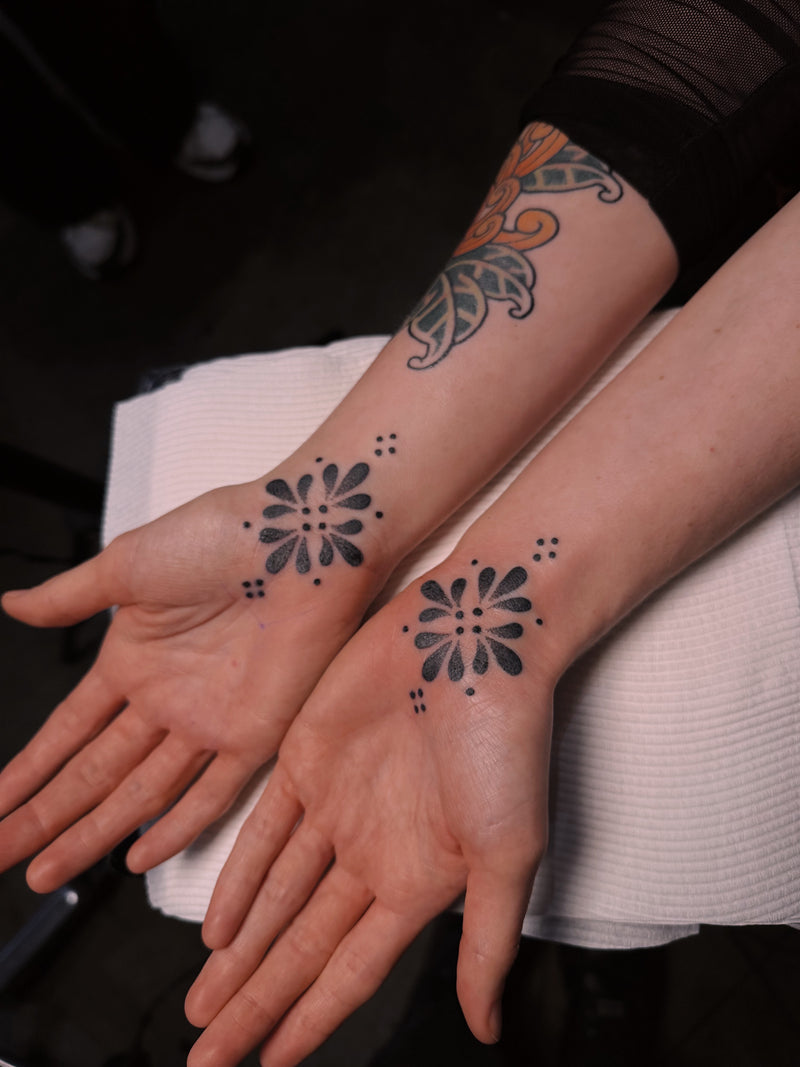
That doesn't mean hands and fingers are off limits. It just means going in with realistic expectations, and handpoke can be a good option for small pieces in those areas.
Choosing a fine line artist
Look for healed photos, not just fresh ones. Fresh fine line work almost always looks sharp; healed work shows whether the lines held. At Umbra, our fine line work is led by Inko and Courtney Anderson, with machine-free handpoke by Georgia Mooney.
Script, florals and small pieces
Fine line script works best when letters are given enough height and spacing to stay readable. Florals suit the style beautifully and can be shaped to follow the line of the arm, collarbone or spine. For small pieces, simple shapes age better than tiny, crowded detail.
Looking after a fine line tattoo
Keep it clean, use a thin layer of aftercare balm, avoid soaking it while it heals and keep it out of the sun. Once it's healed, sunscreen is the single best thing you can do for it. Read our full tattoo aftercare guide for step-by-step instructions.
Frequently asked questions
Will my fine line tattoo blur?
All tattoos soften a little over time. Good spacing, sensible sizing and sun protection keep fine line work crisp for much longer.
Can I get a fine line tattoo on my finger?
Yes, but finger tattoos fade faster and often need touch-ups. Your artist will talk you through what to expect.
Do fine line tattoos hurt less?
Fine line is gentle on the skin, but how it feels varies a lot from person to person. Your artist will keep you comfortable, with regular breaks whenever you need them.
Ready for your fine line piece?
Most fine line tattoos can be quoted and booked straight away. Tell us your idea and we'll match you with the right artist.
Instant quote & bookingEnquiry form