
How to Plan a Japanese Sleeve Tattoo: A Step-by-Step Guide
A Japanese sleeve is one of the biggest commitments you can make to a tattoo, and one of the most rewarding. Done well, it reads as a single piece of art that moves with the arm, not a collection of separate images. This guide walks through how a sleeve is planned at Umbra, from the first idea to the final session, so you know what to expect before you book.
1. Start with the main subject
Every Japanese sleeve is built around one hero image. Common choices include:
- Koi for perseverance, from the legend of the carp that swam up a waterfall and became a dragon
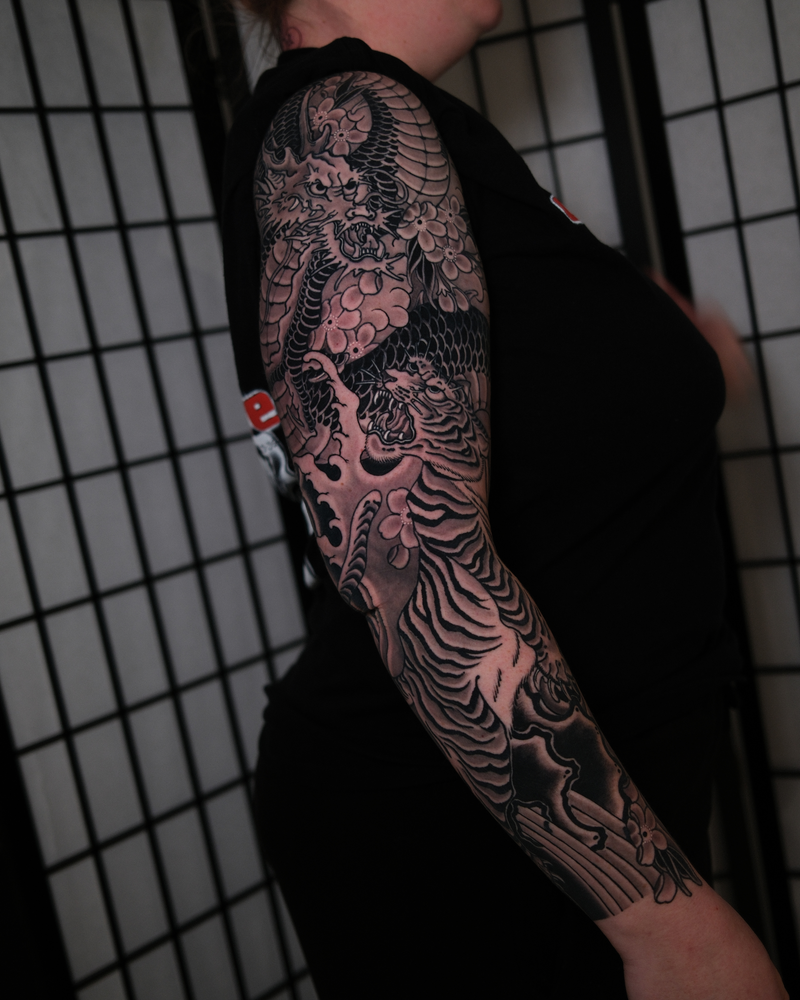
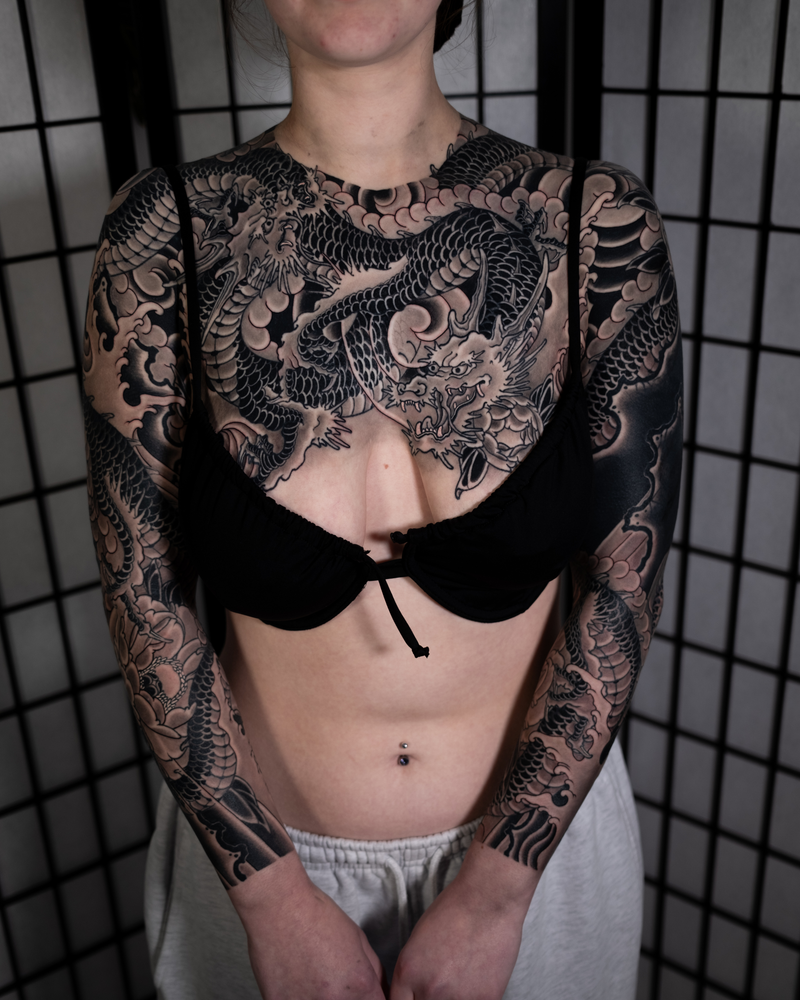
- Dragon for strength and wisdom
- Tiger for courage and protection
- Phoenix for rebirth
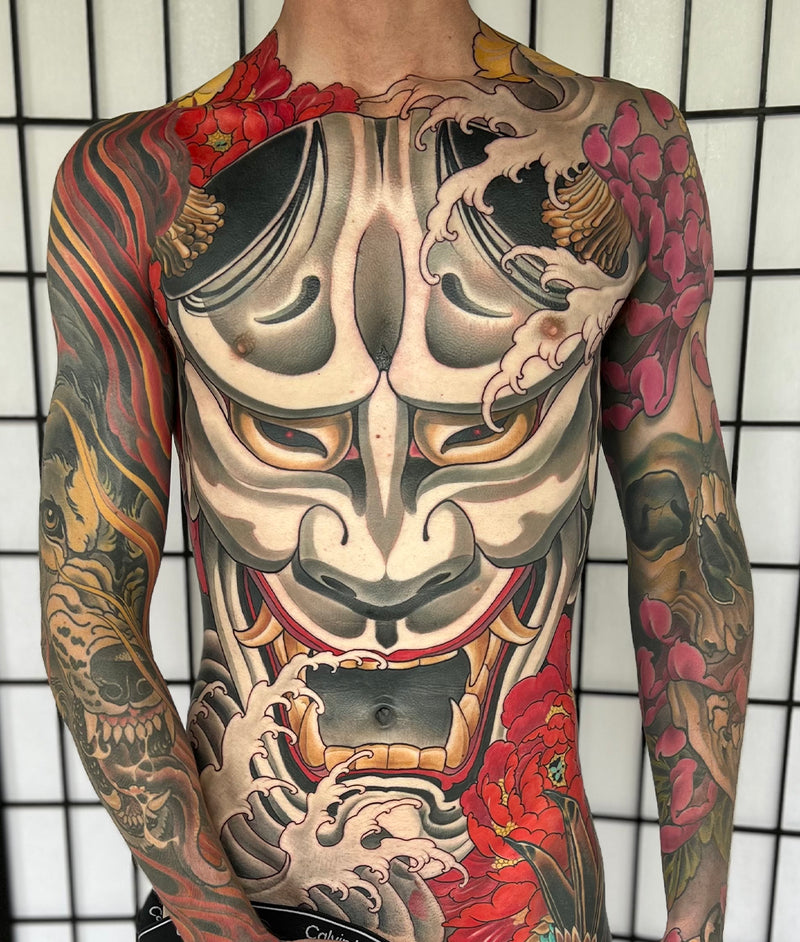
- Hannya mask for passion and jealousy
- Snake, foo dog or a samurai or warrior figure drawn from folklore
You don't need to know the full story behind your subject before your consult, but it helps to know why it appeals to you. Your artist will help you choose imagery that fits both the meaning you want and the shape of your arm.
2. Pair it with flowers and seasons
Traditional Japanese work matches the main subject with flowers and seasonal elements. Peonies, cherry blossoms, chrysanthemums and maple leaves each carry their own meaning and belong to particular seasons, so they're chosen to sit naturally alongside the creature or figure rather than picked at random. This is one of the details that separates authentic Japanese work from a collection of Japanese-looking images.
3. Think about the background
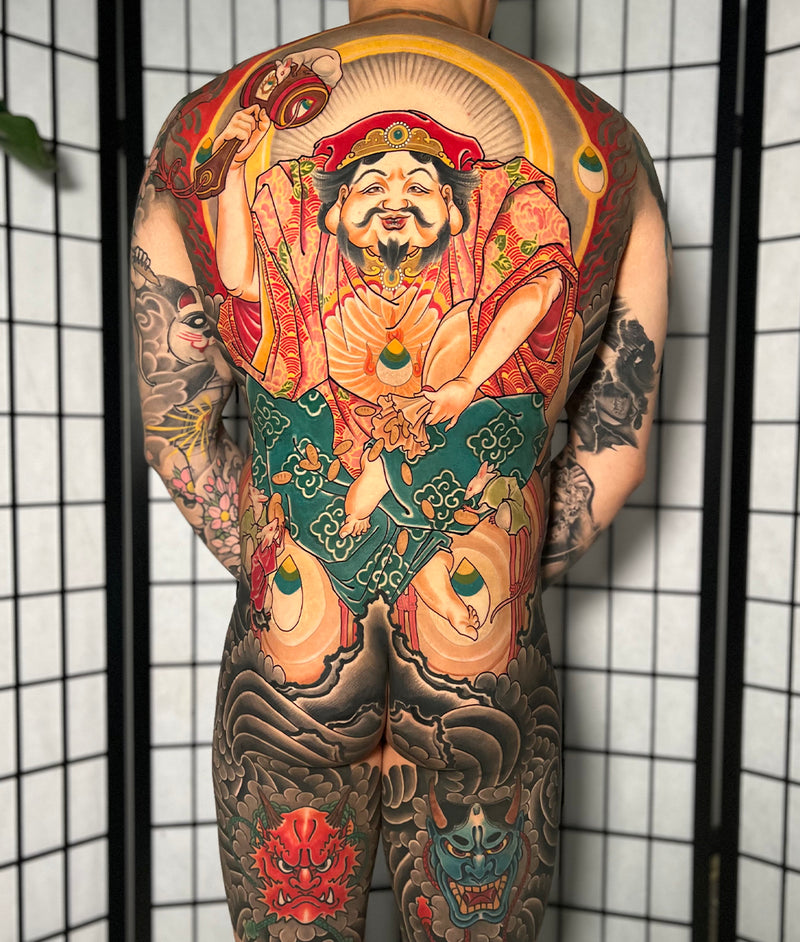
The background is what turns separate images into a sleeve. Wind bars, waves, clouds, water and rocks fill the space between the main elements and give the whole arm a sense of movement. It's usually the background that makes a sleeve look finished, so it's planned from the start rather than added at the end.
4. Decide on colour or black and grey
Japanese tattoos work in both. Full colour gives the classic, bold look of traditional irezumi. Black and grey is subtler and can suit people who prefer a darker, more muted feel or who already have black and grey work. Neither is the “right” choice; it's about what suits you, your skin and any existing tattoos. Your artist can show you healed examples of both.
5. Choose your length: half, three-quarter or full
A half sleeve usually covers the upper arm, a three-quarter runs to just below the elbow, and a full sleeve goes to the wrist. Many people plan a full sleeve from day one even if they tattoo it in stages, because it's much easier to design the flow once than to extend a half sleeve later. If you think you might want more one day, say so at your consult.
6. Pick the right artist
Large Japanese work needs an artist who thinks in composition and flow, not just individual images. Look for healed sleeves in their portfolio, not just fresh photos, and check that their style matches what you have in mind, whether that's traditional irezumi, neo-Japanese or black and grey. At Umbra, our Japanese work is led by Jake Danielson, Hayden Thompson, Frederick Bain and Ben Smith. You can see more of their work on our Japanese tattoo page.
7. The consultation
For a project this size, start with a free consultation. This is where you and your artist talk through the subject, the flowers and background, colour or black and grey, the length of the sleeve and how it will connect to any existing tattoos. Bring reference images if you have them, but don't worry if your idea is still loose. Shaping it is part of the artist's job.
8. How the sessions work
A sleeve is tattooed over several sessions. The design is usually outlined first, then shaded and coloured in later sittings, with time between sessions for each area to heal. The number of sessions depends on the size, detail and colour of the piece and on how your skin takes the work, so your artist will give you an idea once the design is set.
9. Healing between sessions
Each section needs to heal before it's worked on again. Follow your aftercare closely, keep the area out of the sun and avoid swimming while it heals. Good healing between sessions is what keeps the finished sleeve crisp. You can read our full tattoo aftercare guide here.
Frequently asked questions
Do I need to know exactly what I want before I book?
No. Most people arrive with a main subject or a feeling they want the piece to have. The consultation is where the design takes shape.
Can a Japanese sleeve be added to existing tattoos?
Often, yes. Wind bars, water and clouds are good at linking or working around existing pieces. Bring photos of your current tattoos to your consult so your artist can plan around them.
Can I start with a half sleeve and extend it later?
Yes, but it's easier if the half sleeve is designed with the full sleeve in mind. Mention it at your consult even if you're not sure yet.
Ready to start planning?
Book a free consultation and we'll match you with the right Japanese artist for your idea. Smaller pieces can be quoted and booked straight away.
Instant quote & bookingEnquiry form