
Tattoo Cover-Ups in Melbourne: What's Possible and How It Works
Almost everyone knows someone with a tattoo they have outgrown: a faded name, an old flash piece, a design that no longer feels like them. A good cover-up turns that into something you are proud to show. This guide covers what is possible, how a cover-up is planned, and when a rework or laser is the better choice.
1. Can my tattoo be covered?
Most tattoos can be covered, but not with any design. Four things decide what is possible:
- Darkness. Light, faded or thin linework is far easier to cover than heavy, saturated black.
- Size. The new design needs to be bigger than the old one, often one and a half to two times the size.
- Placement. The shape of the area limits how far the new piece can grow.
- Skin condition. Scarring or heavily worked skin can affect how new ink settles.
The best first step is simply to show us. A clear photo in good light, with a rough measurement, tells an experienced artist almost everything.
2. Cover-up, rework or laser?
There are three ways to deal with a tattoo you are not happy with, and the right one depends on the tattoo:
- Rework. If the bones of the tattoo are good, an artist can refresh the lines, add shading or colour, and build on it rather than hide it.
- Cover-up. A new design is drawn so the old tattoo disappears into its darker areas and texture.
- Laser first. For very dark or heavy work, a few sessions at a specialist laser clinic can lighten the old tattoo and open up far more design options for the cover-up.
3. Which styles cover best
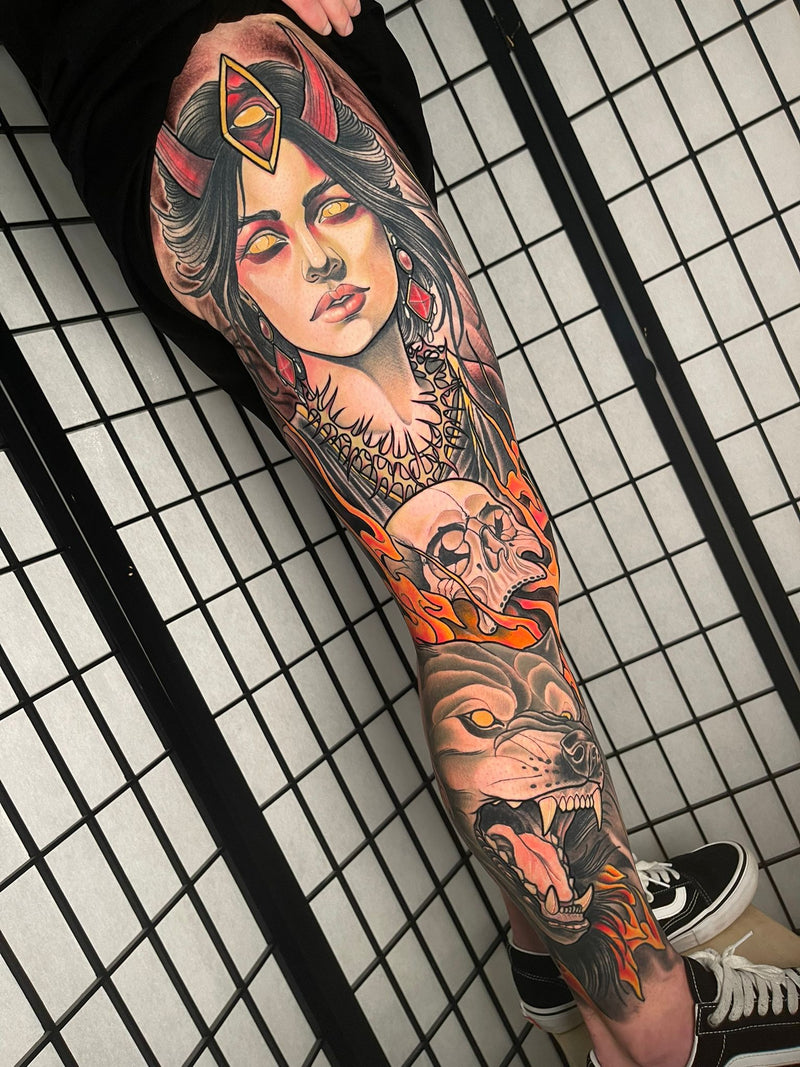
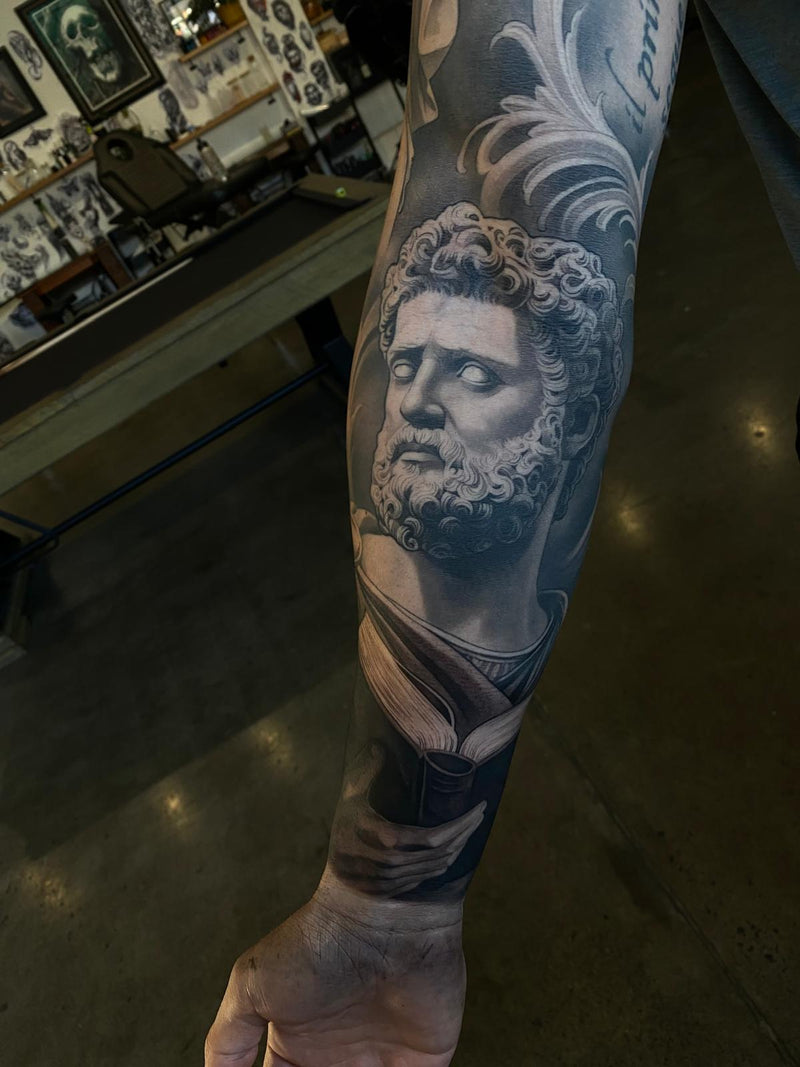
Cover-ups rely on darker values, texture and organic shapes to absorb what is underneath. Styles that naturally do this include black and grey realism, Japanese, neo-traditional and illustrative work with strong blacks: think florals with dark foliage, animals with fur or feathers, smoke, clouds and water.
Light, open styles like fine line are beautiful, but they rarely hide much. If you love a delicate look, a rework or a few laser sessions first may get you closer to it.
4. How a cover-up works at Umbra
Every artist at Umbra specialises, so we start by matching your cover-up to the artist whose style will hide it best. From there:
- Send a photo through the enquiry form, with the placement and rough size.
- Consultation. Your artist looks at the old tattoo in person, talks through ideas, and is honest about what will and won't work.
- Design. The new piece is drawn around the old one, placing dark areas and texture exactly where they are needed.
- Sessions. Smaller cover-ups are often done in one sitting; larger ones are built over several.
5. Healing a cover-up
A cover-up heals like any other tattoo. Keep it clean, lightly moisturised and out of the sun while it settles. Our aftercare guide walks you through it day by day.
Frequently asked questions
Can any tattoo be covered?
Most can, but not every tattoo can be covered with any design. Size, darkness and placement decide what is possible. Send a clear photo and we will tell you honestly what will work.
How much bigger does a cover-up need to be?
Usually a fair bit bigger than the original, often one and a half to two times the size, so the new design has enough room and detail to absorb the old one.
Can a cover-up be fine line?
Rarely. Fine line is open and light, so it can't hide much. Cover-ups work best with darker, textured styles like black and grey realism, Japanese, neo-traditional and blackwork.
Do I need laser first?
Not always. For very dark or heavy tattoos, a few laser sessions at a specialist clinic can lighten the old work and open up far more design options. Your artist will tell you if it is worth it.
How much does a cover-up cost?
It depends on the size and detail of the new piece. Cover-ups are quoted like any custom tattoo, usually after a consultation.
Ready to cover it up?
Send us a clear photo of your tattoo and we'll match you with the right artist and an honest plan.
Enquiry formInstant quote & booking