
Planning a Black and Grey Realism Tattoo: Portraits, References and Size
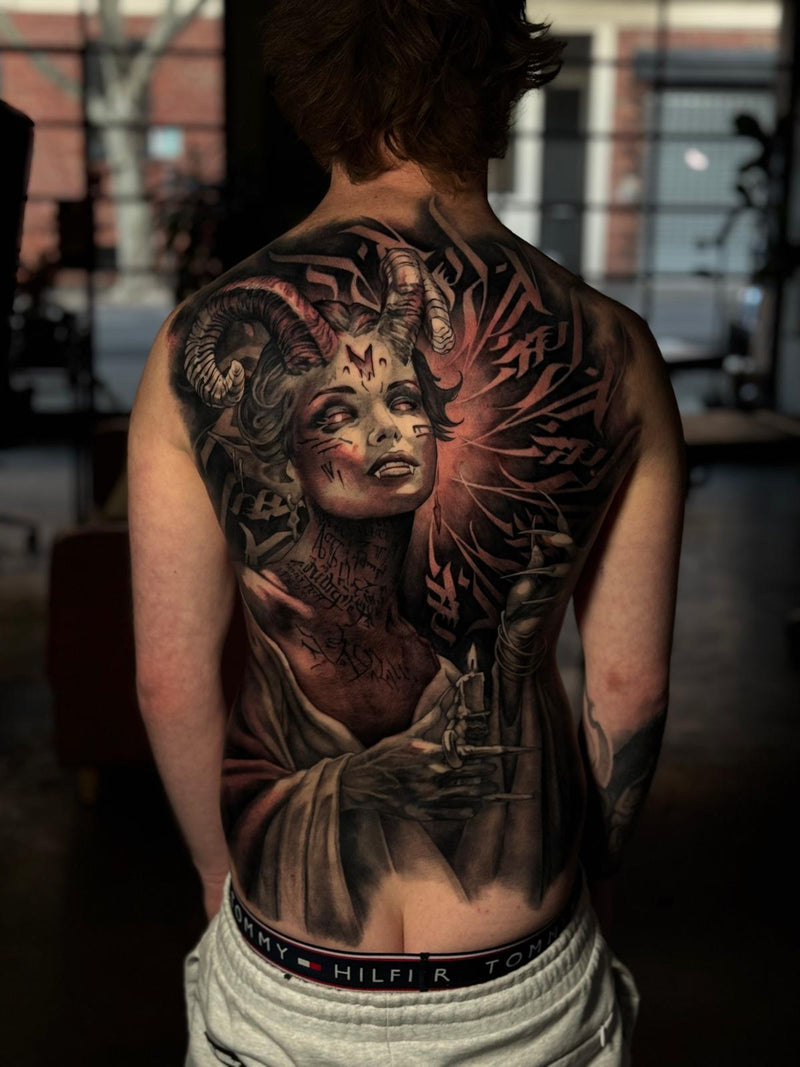
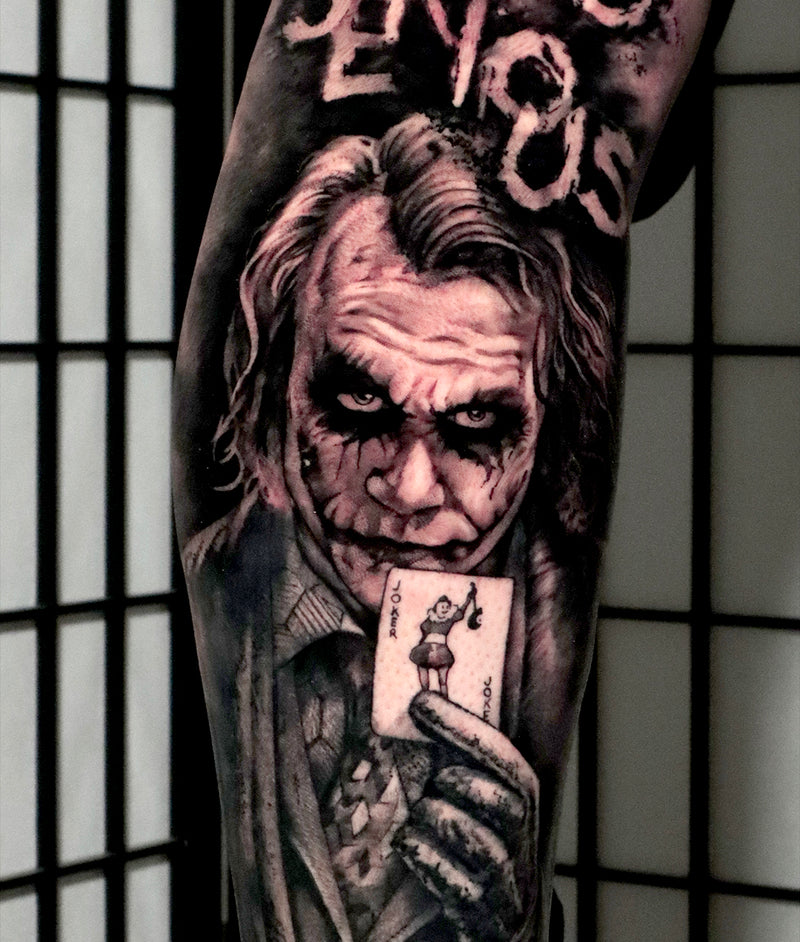
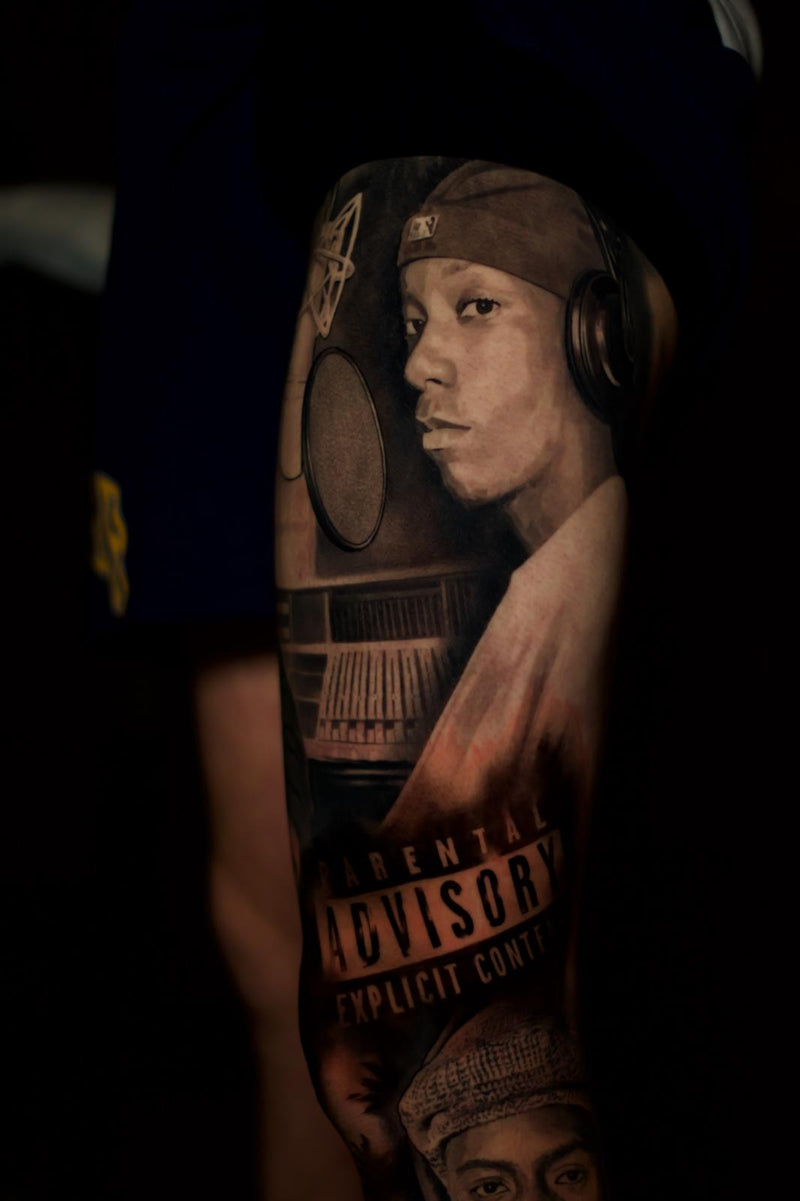
Black and grey realism can look almost photographic on skin: portraits of loved ones, statues, wildlife and dramatic large-scale scenes. It's also one of the most technical styles there is, and the planning you do before the first session has a huge effect on the result. Here's what to know.
What is black and grey realism?
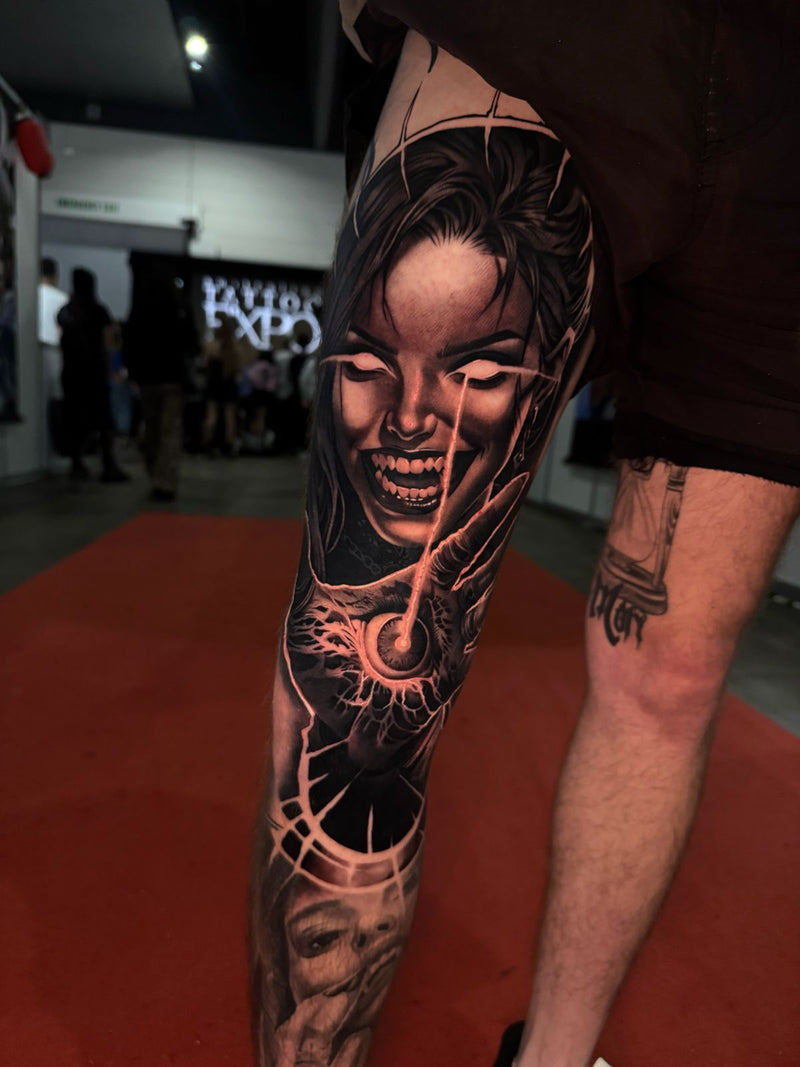
Realism uses smooth gradients of black and grey ink to recreate light, shadow and texture. There are no bold outlines holding the image together, so contrast and composition do all the work.
Choosing a great reference photo
For portraits especially, the reference makes or breaks the tattoo. Look for:
- Sharp focus on the face, especially the eyes.
- Strong lighting with clear highlights and shadows, rather than flat, even light.
- High resolution. A screenshot of a screenshot won't hold enough detail.
- A clear expression that captures the person or animal the way you remember them.
Send a few options. Your artist can often combine elements or suggest which photo will translate best.
Size matters more than you think
Realism relies on fine detail and subtle shading, and that detail needs room. A portrait that's too small loses its likeness as the ink settles. Your artist will recommend a minimum size for the level of detail you want, and going bigger almost always pays off.
Placement and flow
Forearms, upper arms, calves, thighs, chests and backs all suit realism well, because they offer smooth, relatively flat areas for detailed work. For sleeves and backpieces, the composition is planned so elements flow into each other with smoke, clouds, light or architecture.
How the sessions work
Small realism pieces may be done in one sitting, while sleeves and backpieces are built over several sessions with healing time in between. Your artist will give you a better idea of timing once the design and size are set.
Our black and grey realism artists
Realism at Umbra is led by Ben Thomas, known for large-scale backpieces and sleeves, Cody Wilson, Ben Smith and Zoe Stephens, whose work leans dark and horror-inspired.
Frequently asked questions
Can you tattoo a portrait of my pet?
Yes. Pet portraits are some of our favourite pieces. A sharp, well-lit photo where you can see the eyes clearly is the best place to start.
Will black and grey realism fade?
All tattoos soften over time. Strong contrast, good sizing and sun protection keep realism looking its best.
Can you combine several photos into one piece?
Yes. Many sleeves and backpieces combine portraits, objects and backgrounds into one composition.
Ready to plan your realism piece?
Larger realism pieces start with a free consultation to plan the design, size and sessions.
Instant quote & bookingEnquiry form